The Story of Jamdani and Its History
From the medieval period until the early 19th century, the entire region comprising present-day Bangladesh and the Indian state of West Bengal was a major hub of the global textile...
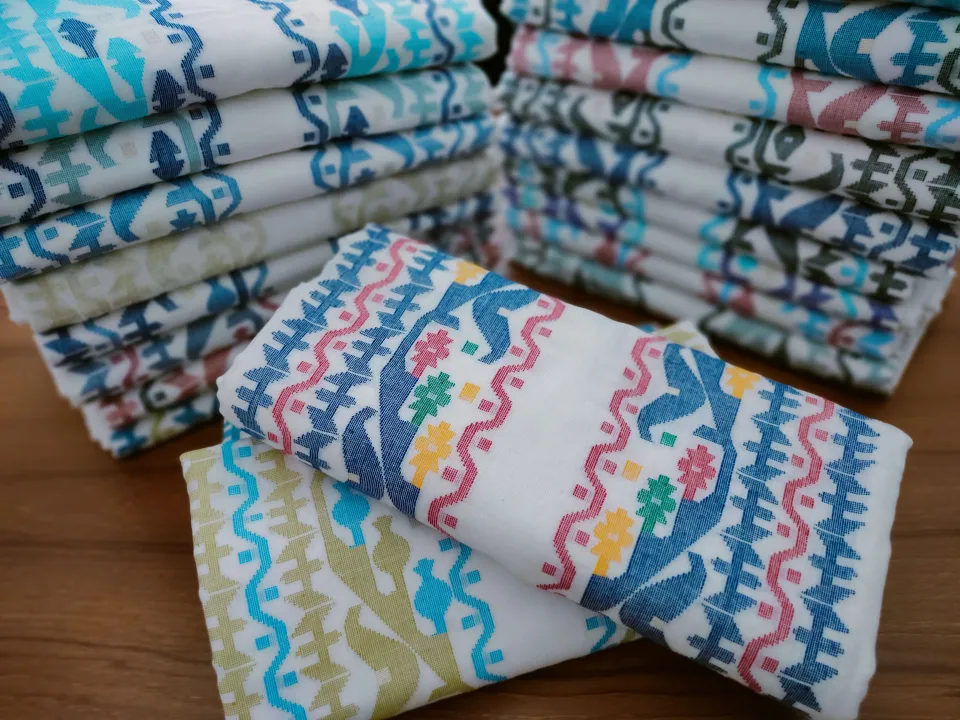
From the medieval period until the early 19th century, the entire region comprising present-day Bangladesh and the Indian state of West Bengal was a major hub of the global textile trade. Jamdani weaving and its intricate patterns represent a glorious tradition of ancient Bengal; indeed, Jamdani is a vital part of Bengal's cultural heritage. Jamdani patterns are neither embroidered nor printed; rather, they are created through a remarkable weaving technique that relies on oral tradition and memory. These designs are woven directly onto the loom—preserving the authentic, original Jamdani style. Its defining characteristic is the harmonious balance of proportional size, style, and placement among its borders, *anchal* (end-piece), *buti* (small floral motifs), *terchi* (diagonal patterns), *jaal* (net-like patterns), and *kolka* (paisley motifs). The Jamdani industry faces a critical risk of extinction.. It faces fierce competition from power-loom sarees, which have significantly lower production costs—not to mention the issue of discouragingly low wages.On December 4, 2013, UNESCO declared Bangladesh's Jamdani weaving art an Intangible Cultural Heritage of Humanity. This recognition makes it possible to play a significant role in preserving Jamdani by involving government institutions and weavers.
Best regards, Aminul Islam
Proprietor Teddy Tex Dhaka, Bangladesh